Join me
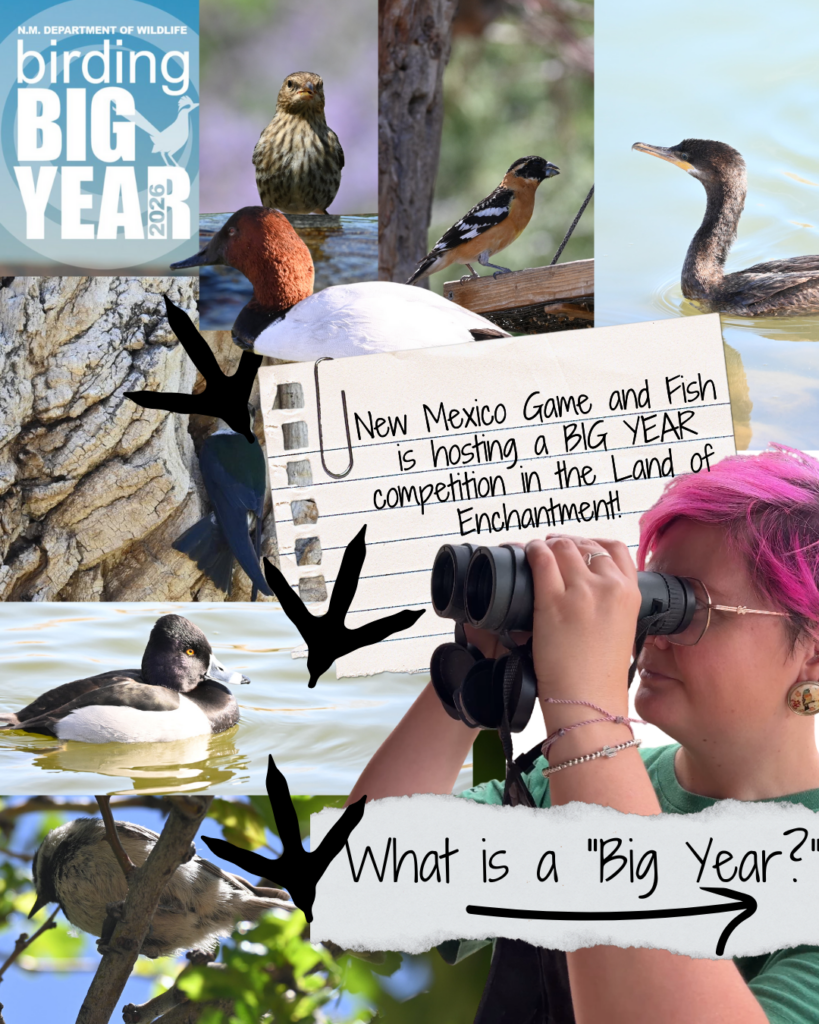
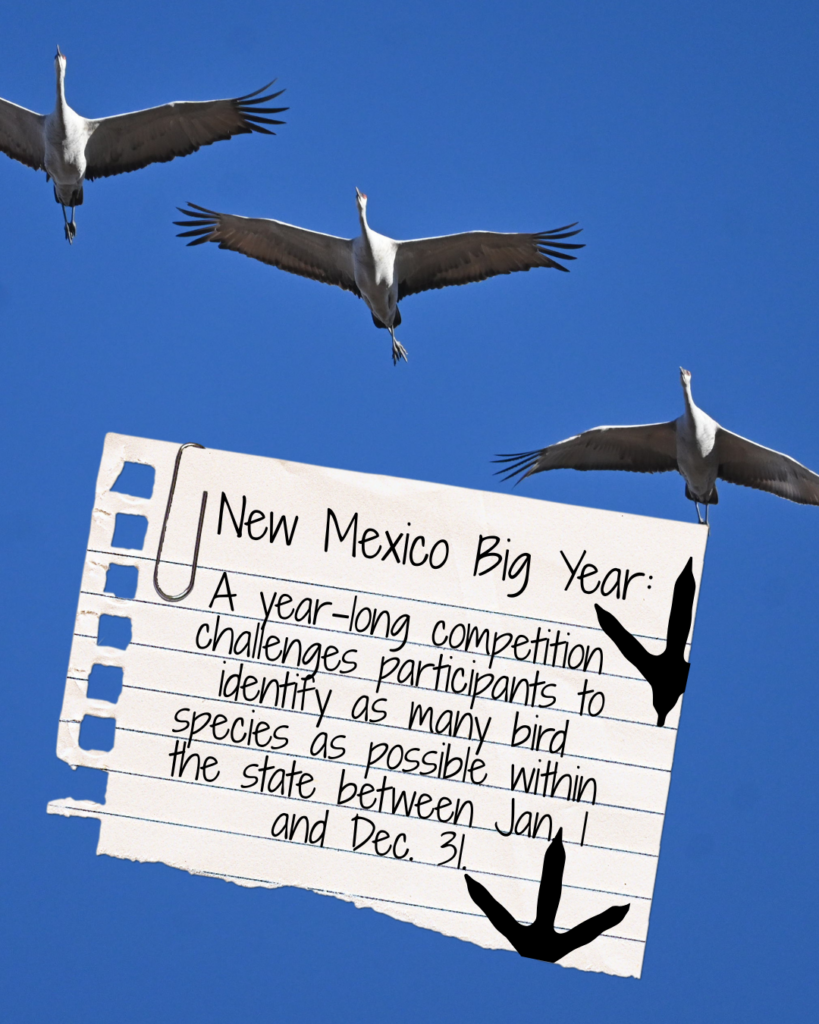
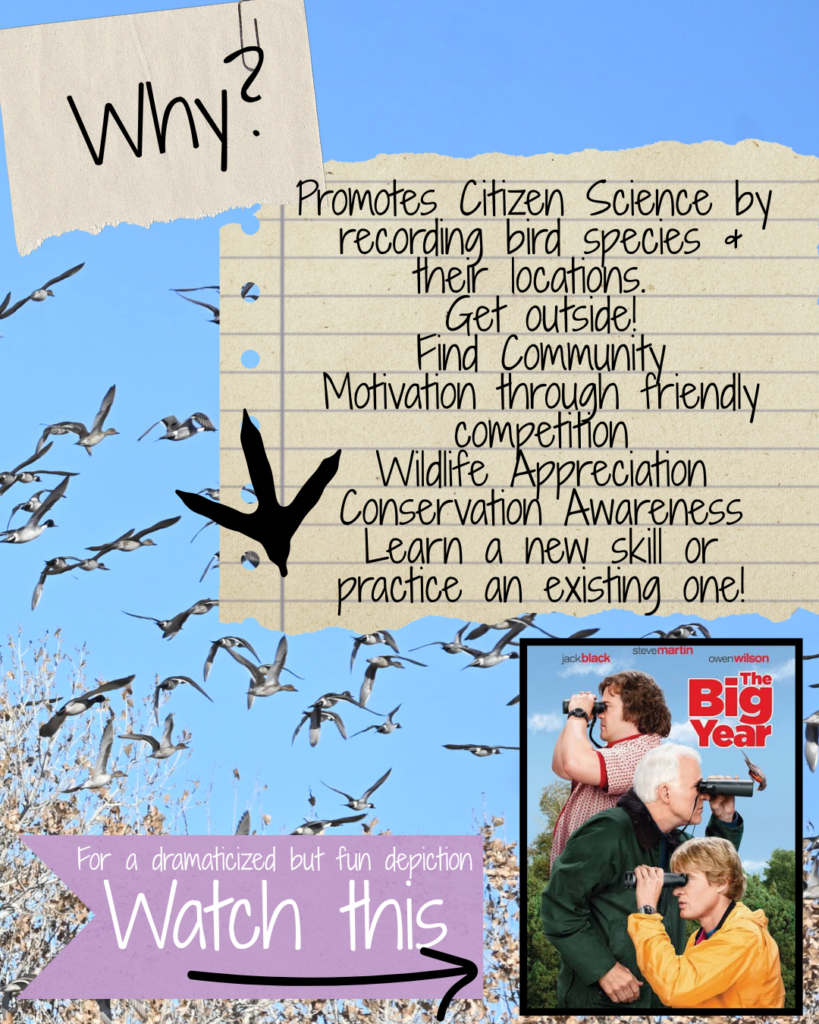
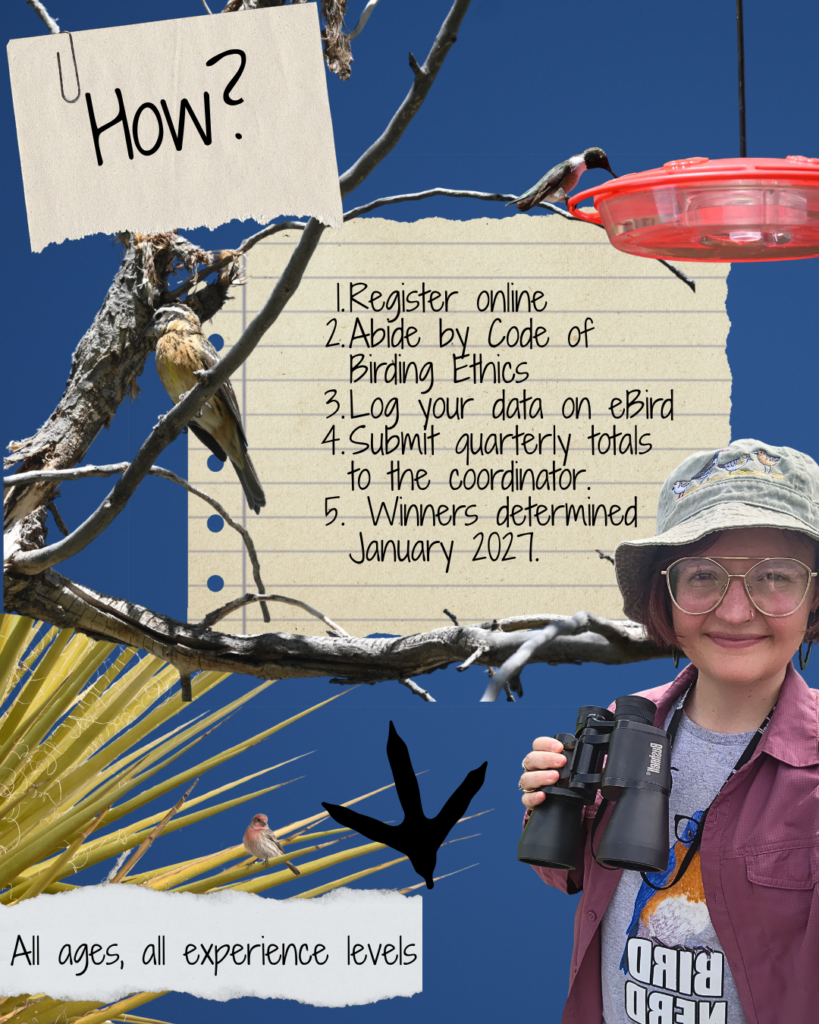
I am thrilled to be participating in New Mexico’s Birding Big Year. I hope this will motivate me to focus my birding efforts in our beautiful state, explore new areas, and travel to seek rarities. I am excited to visit new regions such as Rattlesnake Springs and City of Rocks, and to hike at higher elevations to see different species. With two jobs and multiple out-of-state trips this year, I am not expecting to win the competition, but participating will be a blast!
For more information see:
https://wildlife.dgf.nm.gov/nm-birding-big-year-contest/
Birding Association’s Code of Birding Ethics
- Promote the welfare of birds and their environment – protect, avoid stressing out birds (don’t get too close, make loud noises to “flush” them, limit use of recordings to attract birds, stay away from nests/roosts/display areas, etc. To help with this, you can use a blind, binoculars, a zoom lens for photography, and natural cover. If you see a rare bird, use caution and evaluate if advertising its presence will cause a disturbance. Stay on roads, trails, and paths.
- Respect the law and rights of others – birders get up to shenanigans for SURE, but please don’t trespass and practice common courtesy.
- Ensure feeders and bird houses are safe. Clean your feeders, provide fresh water, and clean food. Please continue feeding birds during the winter, when they may require the most food. KEEP YOUR CATS INDOORS. Cats are the NUMBER ONE cause of bird deaths. Not buildings, not windmills…CATS.
- Use special care when birding in groups: respect other birders, intervene if you witness unethical birding, be a good role model, and ensure others know this code.
The Categories for New Mexico’s Birding Big Year
- Youth – 13-17
- Adult – 18-64 (3 skill levels: Novice, Intermediate, and Advanced)
- Senior – 65 and up (3 skill levels: Novice, Intermediate, and Advanced)
Recording Rules from New Mexico Game and Fish
Participants who submit their list totals to the program coordinator for the New Mexico’s Birding Big Year for consideration must observe the following Recording Rules:
- The bird must be observed within the boundaries of New Mexico and in the corresponding month period: Jan. 1–Dec. 31, 2026, when seen.
- The bird must be a species currently accepted by the New Mexico Bird Records Committee (NMBRC) of the New Mexico Ornithological Society for state lists, or, if a new species for New Mexico is recorded, it must meet NMBRC standards and be accepted on the official New Mexico Bird Checklist.
- The bird must be alive, wild, and unrestrained when encountered.
- Diagnostic field marks for the bird, sufficient to identify to species, must be seen and/or heard and/or documented by the recorder at the time of the encounter. The bird must have been encountered under conditions that conform to the ABA Code of Birding Ethics. See the separate attachment.

Leave a Reply